Outdoor Event Staffing Tips for Summer Activations

How to Choose Event Swag That Feels Useful and On Brand
August 11, 2026
What Makes an Influencer Event Effective for Brand Awareness?
August 28, 2026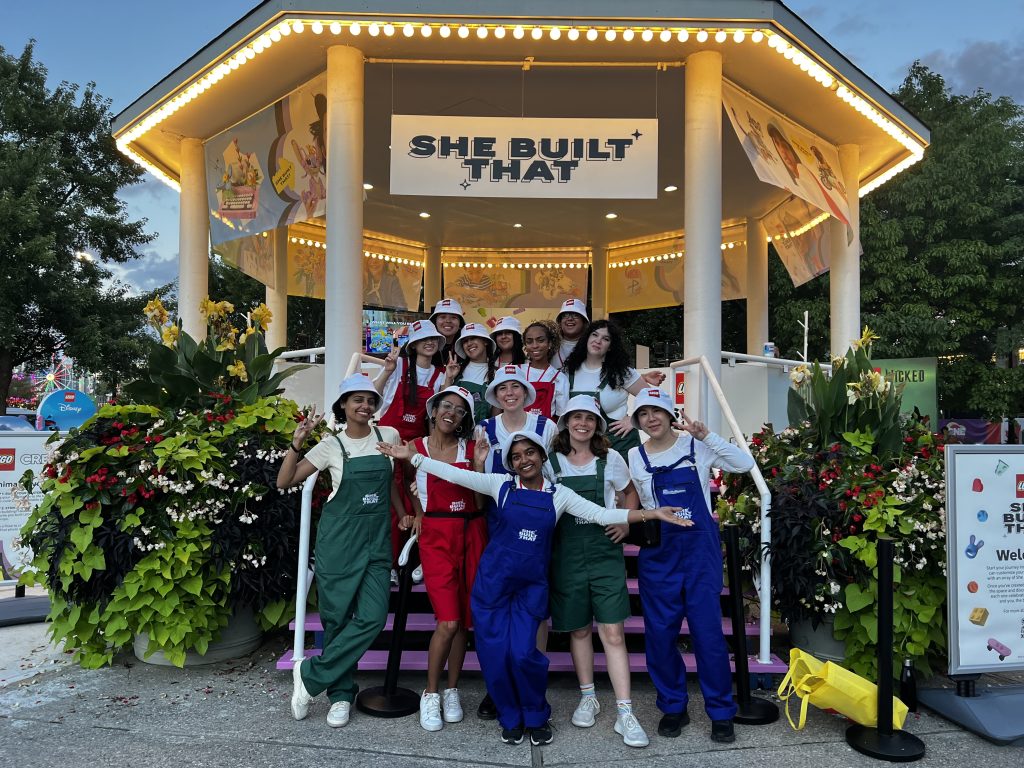
If you’re in the marketing space, you already understand that summer does half the work for you.
This is because during this period, the crowds are already outside, the energy is already up, and people are actively looking for something to do.
But that built-in attention can also be a trap because an outdoor activation with the wrong staffing plan can potentially burn through all that goodwill.
Unlike an indoor booth with climate control, fixed walls, and a captive audience, outdoor experiential activations live at the mercy of heat, glare, noise, and a crowd that can walk away in any direction.
Besides, getting summer staffing right is all about designing a team and a schedule that can actually perform in the elements.
Here are five ways to do it.
Schedule Around the Sun
The biggest staffing mistake in summer activations is treating an 8-hour outdoor shift the same way you’d treat an 8-hour indoor one.
Heat fatigue sets in fast, and a tired brand ambassador at hour six is a liability and not an asset.
Build shifts in 2 to 3-hour rotations with short breaks in shade or air conditioning, and stagger start times so you always have fresh energy on the floor during peak traffic windows.
Note that this is exactly the kind of detail experienced event staffing partners plan for before the event ever gets booked.
Dress Staff for Performance and Not Just Branding
Even though branded apparel matters, in summer, it has to do double duty. A heavy polo or a full branded uniform that looks great in a mockup can become a liability by 2 p.m. in direct sun.
Choose breathable, moisture-wicking fabrics in your brand colours. However, don’t skip the practical layer that includes hats or visors, sunglasses and closed-toe, non-slip shoes for staff who’ll be standing or moving across grass, gravel, or pavement all day.
Brand ambassadors who are physically comfortable tend to be more confident and approachable, which directly impacts the number of people they engage with.
Build a Bench of Backup Staff
The rate of no-show and fatigue-related dropout tend to climb in summer months.
This can be caused by heat exhaustion, a last-minute scheduling conflict, or simple burnout from a run of back-to-back outdoor events.
A single-layer staffing plan with no backups is a plan that breaks the first time someone can’t make it.
Always work with a partner that maintains an on-call roster of vetted, pre-briefed event staff who can step in without a scramble.
Train for the Realities of Open-Air Engagement
Outdoor activations don’t have walls to funnel attention, which means your team has to create that structure themselves.
Foot traffic moves differently in a park, a festival grounds, or a street closure than it does inside a convention hall, and staff need specific training for it.
That includes reading which direction crowds are naturally flowing, physically positioning themselves to intercept rather than wait, and projecting energy over ambient outdoor noise like music, traffic, or competing activations nearby.
This is the same principle behind strong tradeshow booth staffing, just adapted for a space with no fixed boundaries.
Equip Teams with Tools That Work Outdoors
While digital lead capture is standard now, summer conditions expose weak tech setups fast.
Screen glare makes tablets hard to read in direct sun, spotty connectivity at outdoor venues can kill live data sync, and batteries drain faster in the heat.
Give staff offline-capable capture tools, portable battery packs, and matte screen protectors, and test the full setup outdoors, in real sun, before the event day.
Pair that with strong field data collection practices, similar to what field market research teams rely on, and you’ll walk away with usable lead data instead of gaps in your CRM.
FAQ About Summer Outdoor Event Staffing
How many staff do I need for an outdoor summer activation?
It depends on footprint and goals, but a rough baseline is one staff member per 150 to 200 square feet of active engagement space.
How do you prevent staff burnout in the heat?
By enhancing shorter rotations, mandatory shaded or air-conditioned breaks, hydration stations, and scheduling your strongest performers during peak-traffic windows.
Is outdoor staffing really different from indoor staffing?
Yes. Outdoor teams need different apparel, different crowd-engagement training, and tech that can hold up to the sun and connectivity issues.
What’s the ideal shift length for a summer outdoor event?
Generally, 2 to 3 hours per rotation, shorter than a typical indoor shift, with breaks built in between.
Bringing Summer Activations to Life
Great summer staffing is not about pushing people to work in the heat, but designing shifts, gear, and training that let your team perform at their best in outdoor conditions.
Get that right, and the natural energy of summer crowds does the rest.
At Tigris Events (powered by Simon Pure), we build outdoor staffing plans around the realities of the season. Contact us today!